Dados necessários para melhorar nosso serviço e personalizar a sua experiência.
Tax reform: coalition of parliamentary fronts
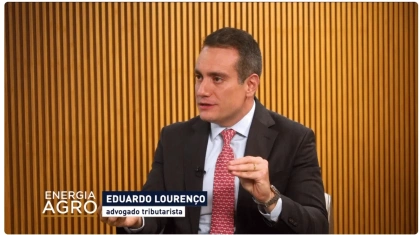
In an article published in Gazeta do Povo, deputy Pedro Lupion and lawyer Eduardo Lourenço, partner at Maneira Advogados, analyze the proposed tax reform regulation and its impact on the Agribusiness sector.

Tax reform: coalition of parliamentary fronts
By Pedro Lupion
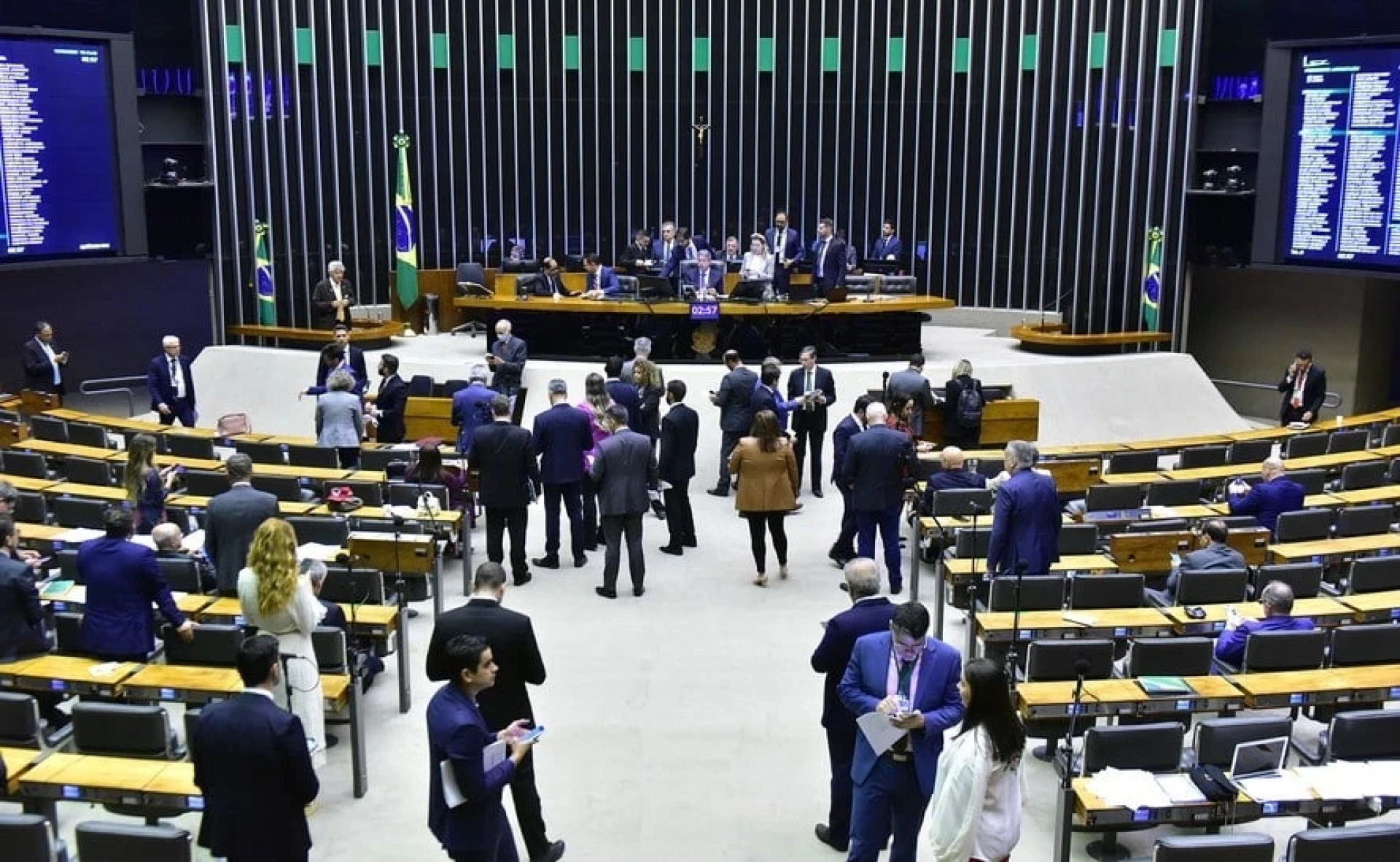
(Photo: Chamber of Deputies)
On January 8th we published the article “Agriculture in Tax Reform: what, in fact, did the FPA achieve?”. On that occasion, we were able to address the advances that the agricultural sector actually achieved with the approval of Constitutional Amendment nº 132/23, when compared with the initial text of PEC nº 45/2019.
In the end, we made a warning that the National Congress would have to “remain attentive to taxpayers' difficulties and act as a sounding board for demands, in order to ensure that the change occurs safely and without increasing the tax burden, guaranteeing, in the end, the desired simplification.”
In other words, the members of the National Congress – as legitimate holders of power, to legislate and decide the direction of regulation – would have to work hard to ensure that the promises that made the approval of the reform possible were fulfilled
It turns out that, following the approval of PEC 132/2023, at the beginning of this year, the Federal Government announced that it would begin studies to regulate tax reform, creating working groups composed of representatives of the Union, States and Municipalities, excluding any effective participation of civil society.
It is worth highlighting that, by effective participation, we mean being heard, debated and taken into consideration. This is what the debates are about, which, in the end, seek to give legitimacy to the decision-making process. Simply receiving suggestions is not capable of attracting the legitimacy that the process needs.
Realizing this movement – that is, the exclusion of society and the decision makers of the National Congress from the debate –, numerous Parliamentary Fronts (more than 20), including the Parliamentary Front for Agriculture (FPA), came together to start the debates and contribute to the best possible regulation.
To this end, the fronts mirrored the Federal Government's working groups, creating, in addition, GT 20 (to address the effectiveness of non-cumulativity). Each “parallel” group was led by a parliamentary front and was made up of all those who wanted to participate. During the development of the work, twenty seminars were held in the Chamber of Deputies (in full available on the Chamber of Deputies' YouTube channel) and a formal public hearing to deliver the work, held on the 17th. It is important to highlight that the government was invited to participate, effectively, in all the seminars and even the public hearing.
Specifically, regarding the work carried out by the FPA, there was participation in all groups and coordination of four of them, namely: (i) GT 2 – Immunities; (ii) GT 5, together with the Mixed Parliamentary Front for Biodiesel (FPBio) – specific tax regime for fuels and lubricants; (iii) GT 7 – operations with goods and services subject to the reduced rate; and (iv) GT 13 – basic food basket.
In any case, more than presenting the projects, the government presented its text last Wednesday, the 24th. These four working groups presented the corresponding projects and texts of complementary laws, marking their position in relation to essential points for the agricultural sector.
To facilitate the understanding of the premises, it is worth dividing the proposed analysis and focusing on what is important for the agricultural sector, as the projects end up addressing several other sectors, such as the PLP, which regulates differentiated taxation regimes.
Initially, GT 2 – Immunities established that export immunity is a premise adopted since 2019, at the beginning of the discussion of PEC 45. However, to achieve the effectiveness of export immunity, it is essential that the return of tax credits accumulated in the chain is guaranteed.
For no other reason than we have, as indispensable premises: (i) ensuring the maintenance and use of credits arising from immune operations; (ii) reimbursement of existing balance after compensation within 30 days; (iii) the IBS Management Committee will only be able to share the amounts with entities (States and Municipalities) after returning the money to taxpayers who have a balance; and (iv) if it is not carried out, the credits may be transferred to third parties without limitation.
In relation to GT 5 – Specific taxation regime for fuels and lubricants, coordinated together with FPBio, the proposal presented followed the constitutional rules of single phase, that is, incidence only once in the chain and uniform rates in the country, only differentiated by product.
In addition, (i) it provided for the use of credits in the production of fuels (which was a victory in the processing of the PEC, obtained by FPA and FPBio); (ii) established the possibility of using, from now on, accumulated PIS and COFINS credits; (iii) provided for the limitation of taxation on biofuels, respecting what was previously approved in EC 123. That is, taxation on biofuel will always be a maximum of 30% of the taxation on the corresponding fossil fuel; (iv) limited the incidence of the selective tax, making it impossible to charge biofuels; and (v) proposed the mandatory allocation of part of the ICMS benefits compensation fund to encourage the production of biofuels.
As for GT 7 – operations with goods and services subject to the reduced rate, the work involved, as already anticipated, several other sectors, many of which are subject to the differentiated rate (reductions that can be 30%, 60% or 100%). In any case, for the agricultural sector, agricultural inputs and products have been established, which will be covered by the 60% reduction in taxation.
In these incidents, the work sought to make the list of inputs as broad as possible and also to bring legal certainty to avoid the discussions we have today about the taxation of inputs.
In addition, there is an express provision, which the FPA widely defended during the PEC debates, that selective tax cannot be applied to anything with a different rate. This point is essential to maintain the rationale of facilitating access to products and services considered essential. What would be the logic if we selectively taxed that which has a reduced IBS and CBS rate, given that the purpose of the IS is precisely to discourage use and consumption?
It was also in this complementary bill that it was stipulated that integrated rural producers and those who earn up to 3.6mm/year will not be taxpayers. They can even choose to be, but they will not be forced to. In line with maintaining non-cumulative nature and privileging and encouraging small rural producers, the bill provides for presumed full credit in the operation of acquiring rural production.
Lastly, and perhaps most relevant, so much so that it was one of the first to be presented, was the work resulting from GT 13 – basic basket. In this specific case, 29 parliamentarians were co-authors. It is what brings great advances to the discussion on food taxation, but not only post-tax reform, but also in this initial phase of regulation. The text now allows the Federal Government to reduce PIS and COFINS rates for all products listed in the National Basic Food Basket – CeNA. This idea is interesting, since the transition of new taxes approved with the PEC only begins in 2026 and the PLP text is already providing instruments to reduce the tax burden on food right away.
Still on this point, considering the moment of transition to the new taxes, the list of foods provided for in the PLP unifies the state and federal basic food baskets, as well as meeting the constitutional requirements (art. 8th, EC 132/23).
Another highlight to be made is that the text of the CeNA PLP provides for the need to maintain credits in exempt operations and, once again, the non-incidence of the selective tax for the same reasons already mentioned above.
Now, the next step is to analyze the text proposed by the Federal Government and check what advances and adjustments should be made. It is one of the functions, perhaps the most important, of the National Congress.
So, the texts are certainly not perfect and deserve improvement. This is exactly what the National Congress is doing: bringing the debate so that society can follow and suggest changes. What cannot be accepted is, once again, leaving the text to be seen in the additions of the second half.
Co-author of the text:
Eduardo Lourenço. PhD student and Master in Constitutional Law from UniCEUB and Master of Laws (LLM) in Tax Law from IBMEC. Partner at Maneira Advogados.
Pedro Lupion
FFederal deputy and president of the Agricultural Parliamentary Front (FPA). Rural producer linked to cooperativism, has a degree in Social Communication with an emphasis on Advertising; He has a master's degree in Political Science from the Francisco de Vittoria and Rey Juan Carlos universities, in Spain, and a specialist in Political Communication and Electoral Campaigns from Georgetown University and in Public Administration and Governance from George Washington University, United States.
**The columnist's texts do not necessarily express the opinion of Gazeta do Povo.
See other related news stories



Press
Averages should not ignore the Contumacious Debtor Law, experts say
May 11, 2026Media should not ignore the Contumacious Debtor Law, experts say Risks are greater for companies that fail to comply with balance sheet obligations and are unaware of the situation of related parties By Suzana Liskauskas, Para o Valor — Rio de Janeiro Instituted...