Dados necessários para melhorar nosso serviço e personalizar a sua experiência.


Reasons for tax stimulus for agribusiness

Reasons for tax stimulus for agribusiness
A brief analysis of the fundamentals that justify tax promotion in the agricultural sector
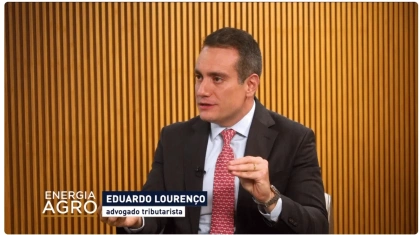
Gabriel Azevedo Moura, Eduardo Lourenço
The Federal Constitution of 1988 expressly establishes the need to stimulate agricultural activity. The art. 23, item VIII, imposes on the Union, states and municipalities the duty to promote agricultural production and organize food supply, while art. 187, item I, in turn, positively binds the legislator and administrators to stimulate, via tax instruments, agricultural policy. In this sense, it can be seen that reduced taxation of agribusiness is not a legislative favor, but rather compliance with constitutional order.
In this sense, as Minister Luiz Fux rightly explained in the opportunity to judge ADI nº 5363, when the “benefit” translates into an inexorable commandment of the constitutional pact – unlike those that are inserted in a context of greater latitude of political choice –, it is preferably worth referring to the norm not as a simple discretionary “benefit”, but as a tax expenditure, used to implement fundamental rights, such as food (articles 6th, caput; 7th, IV; 208, VII; and 212, § 4th, CF), national development (art. 3, II, CF) and food security (art. 6th, CF).
The only “benefit”, therefore, would be to provide easily accessible food for the entire population.
This is because the policy that reduces the cost of agricultural production aims to especially favor the most vulnerable population, in an attempt to lower the price of essential foods. Such conduct affirms selectivity due to essentiality, therefore mitigating tax regressivity.
Not only basic foods are considered essential (which is why the rates on the sales of products included in the national basic basket will be reduced to zero – art. 121 of LC 214/25), but also the agricultural pesticide used in the production of these foods (which is why the rates on the supply of inputs will be reduced by 60% – art. 138 of LC 214/25).
Regarding the reduction of the tax burden on agricultural pesticides, it is worth highlighting Professor Virgílio Afonso da Silva's reasoning regarding the necessity test. “A fair and canonical definition of what necessity means is the following: a means is necessary if its objectives cannot, at least equally, be achieved by another means less intrusive to the restricted right”[1].
In the sense of the author's argument, the necessity test rejects a potential alternative, which, although less restrictive, is not equally effective, costs more money or has a negative impact on the rights of third parties. In other words, it is certain that a significantly more costly measure is not really an alternative, at least for the purposes of the principle of proportionality.
From this perspective, tax expenditures on agricultural pesticides remain eligible to pass the necessity test. This is because, currently, there are no alternative agricultural pest control technologies that do not harm technical-scientific, institutional, economic, social, legal and educational factors. Therefore, it is necessary to reduce the tax burden on agricultural pesticides.
In this sense, as Minister Alexandre de Moraes rightly recognizes in the judgment of ADI 5553, “the end of tax relief for phytosanitary products would increase the commitment of the Brazilian worker's minimum wage from 46.4% to 50.8% when purchasing a basic food basket. Higher taxation of these products would also negatively impact inflation, with a forecast increase of 9.5% in the annual IPCA.”
It should also be noted that reducing the tax burden on agricultural pesticides does not directly imply an increase in their use by the productive sector. To carry out this analysis, structural variables of agricultural production and the rational behavior of rural producers in the face of production costs must be considered.
Because agricultural pesticides (i) represent a significant cost to producers – even with the differentiated tax regime; and (ii) they are necessary for agricultural production, the tax reduction only means a reduction in costs for the producer. No proportional increase in the use of pesticides.
Agronomic practice is guided by the continuous search for efficiency, through the use of these inputs at the lowest possible level, as long as it is compatible with the maintenance of production and profitability. In other words, at the end of the day, pesticides continue to be a cost for the rural producer, so that, even with the tax incentive, it is still costly.
In fact, it is important to highlight that the tax incentive for deferral provided for in art. 138 of LC 214/25 does not even impact the collection. This is just a change in the billing technique. In a very brief analysis, only the moment and the taxpayer of the payment are changed, which will occur, as a rule, at the end of the deferral (provided for in §5 and following of article 138 of LC 214/25), preserving the tax burden of the final product. In these cases, therefore, the tax incentive for agriculture does not represent any tax exemption. There is no tax expenditure: “negative effect on State income”, as summarized by Pedro Herrera Molina[3].
As for the Selective Tax, its incidence on agricultural products and inputs is prevented by provision of EC 132/23 itself, which, in §9 of art. 9th, provides that the Selective Tax “will not apply to goods or services whose rates are reduced”. Now, it would be contradictory for the derived constituent to reduce the IBS and CBS rate by 60% to promote agricultural activity (positive induction), and, soon after, burden it with the Selective Tax (negative induction), nullifying any incentive.
Finally, the incidence of the Selective Tax in this sector would also have the ability to mitigate the immunity of exports provided for in art. 153, §6º, I of the CF. This is because, in this hypothesis, the tax would be included in the price of the product destined for a foreign country, being exported together. This consideration is relevant, considering that the export of rural products represented around 50% of total exports in 2024, totaling approximately US$ 164.4 billion[4].
If, considering the teaching of Chief Justice John Marshall, the power to tax is the power to destroy, perhaps true wisdom lies in identifying what one does not intend to destroy.
[1] Free Translation. SILVA, Virgílio Afonso da. Standing in the shadows of balancing: proportionality and the necessity test. I-CON, v. 20, no. 5, p. 1738-1767, 2022, p. 1742.
[2] CAMPANHOLA, Clayton; BETTIOL, Wagner. Situation and main obstacles to the use of alternative methods to pesticides in controlling pests and diseases in agriculture.
CAMPANHOLA, Clayton; BETTIOL, Wagner. Alternative phytosanitary control methods. Brasília: Embrapa, 2003, p. 272-276.
[3] MOLINA, Pedro Manuel Herrera. La Exencion Tributaria. Madrid: Colex, 1990, p. 58.
[4] Brazil, Secretariat of Social Communication / Ministry of Agriculture and Livestock, 2025. Available at https://www.gov.br/secom/pt-br/assuntos/noticias/2025/janeiro/marca-historica-do-agronegocio-brasileiro-destaca-protagonismo-na-seguranca-al imentar-global#:~:text=As%20exporta%C3%A7%C3%B5es%20do%20agroneg%C3%B3cio%20brasileiro,de%20algumas%20das%20principais%20commodities
Brazil, Secretariat of Social Communication / Ministry of Agriculture and Livestock, 2025. Available at: https://www.gov.br/secom/pt-br/assuntos/noticias/2025/janeiro/marca-historica-do-agronegocio-brasileiro-destaca-protagonismo-na-seguranca-al imentar-global#:~:text=As%20exporta%C3%A7%C3%B5es%20do%20agroneg%C3%B3cio%20brasileiro,de%20algumas%20das%20principais%20commodities
CAMPANHOLA, Clayton; BETTIOL, Wagner. Alternative phytosanitary control methods. Brasília: Embrapa, 2003, p. 272-276.
MOLINA, Pedro Manuel Herrera. La Exencion Tributaria. Madrid: Colex, 1990, p. 58.
Free Translation. SILVA, Virgílio Afonso da. Standing in the shadows of balancing: proportionality and the necessity test. I-CON, v. 20, no. 5, p. 1738-1767, 2022, p. 1742.

Gabriel Azevedo Moura
Graduating in law from IDP. Legal assistant at Maneira Advogados. Director and founder of the Agribusiness Legal Observatory research group, linked to IDP

Eduardo Lourenço
Lawyer. LLM in tax law, master and doctor in constitutional law. Advisor to the Agribusiness Legal Observatory research group, linked to IDP
See other related news stories




Press
Averages should not ignore the Contumacious Debtor Law, experts say
May 11, 2026Media should not ignore the Contumacious Debtor Law, experts say Risks are greater for companies that fail to comply with balance sheet obligations and are unaware of the situation of related parties By Suzana Liskauskas, Para o Valor — Rio de Janeiro Instituted...