Dados necessários para melhorar nosso serviço e personalizar a sua experiência.
Reform threatens to raise water bills

Reform threatens to raise water bills
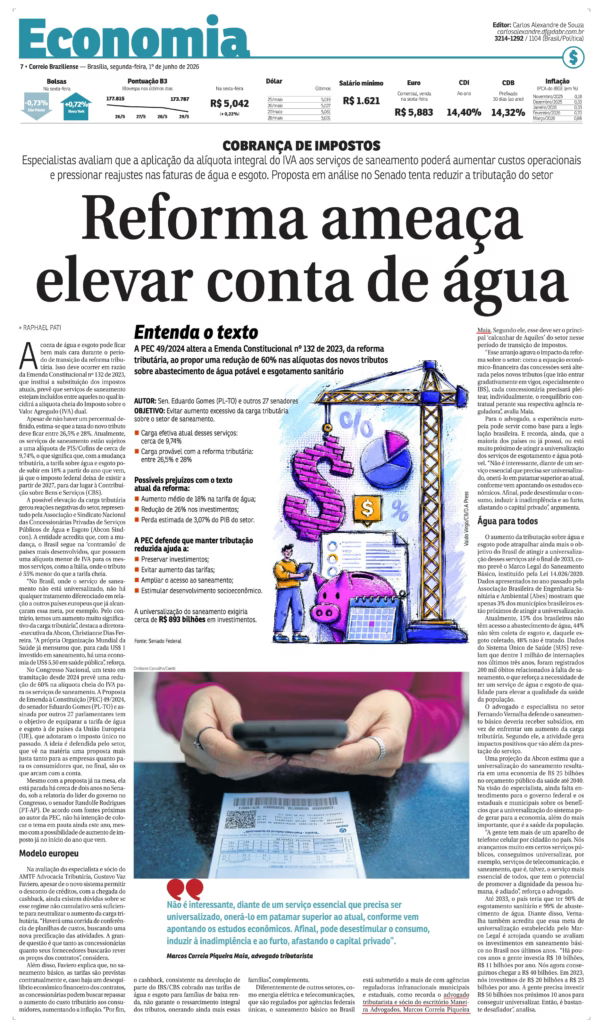
Experts estimate that the application of the full VAT rate to sanitation services could increase operational costs and pressure readjustments in water and sewage bills. Proposal under analysis in the Senate attempts to reduce sector taxation
By Raphael Pati
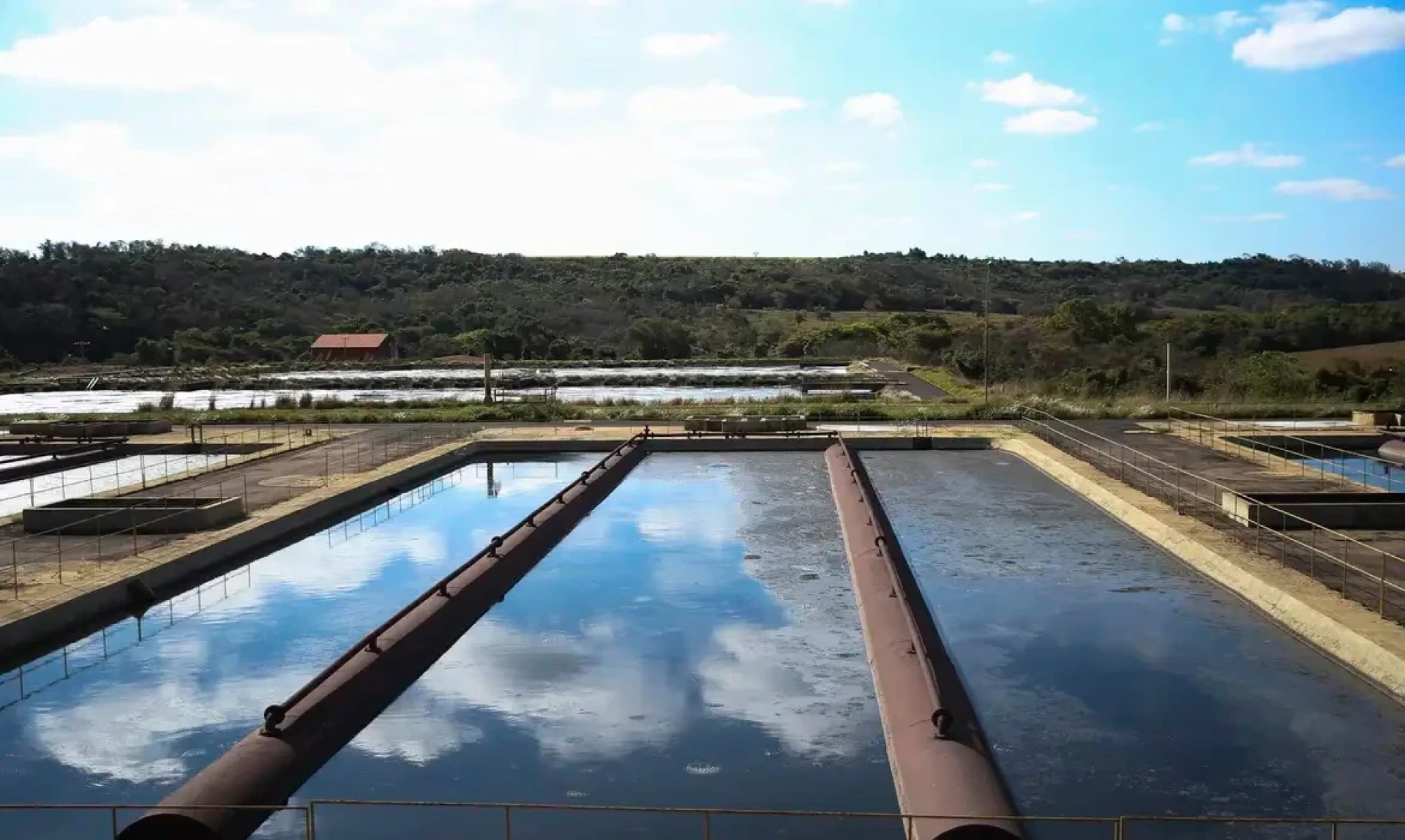
Photo: José Cruz/Agência Brasil
Water and sewage bills can become much more expensive during the tax reform transition period. This must occur due to Constitutional Amendment No. 132 of 2023, which institutes the replacement of current taxes, provides that sanitation services are included among those on which the full rate of dual Value Added Tax (VAT) will apply.
Although there is no defined percentage, it is estimated that the new tax rate should be between 26.5% and 28%. Currently, sanitation services are subject to a PIS/Cofins rate of around 9.74%, which means that, with the tax change, the tariff on water and sewage could increase by 18% from next year, as the federal tax ceases to exist from 2027, to make way for the Contribution on Goods and Services (CBS).
The possible increase in the tax burden generated negative reactions from the sector, represented by the National Association and Union of Private Concessionaires of Public Water and Sewage Services (Abcon Sindcon). The entity believes that, with the change, Brazil goes against more developed countries, which have a lower VAT rate for the same services, such as Italy, where the tax is 55% lower than the full rate.
"In Brazil, where the sanitation service is not universal, there is no differentiated treatment in relation to other European countries that have already achieved this goal, for example. On the contrary, we have a very significant increase in the tax burden", highlights the executive director of Abcon, Christianne Dias Ferreira. “The World Health Organization itself has already measured that, for every US$1 invested in sanitation, there is a saving of US$5.50 in public health”, he reinforces.
In the National Congress, a text in progress since 2024 provides for a 60% reduction in the full VAT rate for sanitation services. The Proposed Amendment to the Constitution (PEC) 49/2024, by senator Eduardo Gomes (PL-TO) and signed by 27 other parliamentarians, aims to equate the water and sewage tariff to that of countries in the European Union (EU), which adopted the single tax in the past. The idea is defended by the sector, which sees the matter as a fairer proposal for both companies and consumers who, in the end, are the ones who foot the bill.
Even with the proposal already on the table, it has been stuck in the Senate for around two years, under the rapporteurship of the government leader in Congress, senator Randolfe Rodrigues (PT-AP). According to sources close to the author of the PEC, there is no intention to put the issue on the agenda this year, even with the possibility of a tax increase at the beginning of next year.
European model
In the assessment of the expert and partner at AMTF Advocacia Tributária, Gustavo Vaz Faviero, despite the new system allowing the discounting of credits, with the arrival of cashback, there are still doubts about whether this non-cumulative regime will be sufficient to neutralize the increase in the tax burden. “There will be a race to check cost spreadsheets, seeking new pricing for activities. The big issue is that both concessionaires and their suppliers will seek to review contract prices”, he considers.
Furthermore, Faviero explains that, in basic sanitation, tariffs are contractually established and, if there is an economic and financial imbalance in contracts, concessionaires may seek to pass on the increase in tax costs to consumers, increasing inflation. “Finally, the cashback, consisting of the refund of part of the IBS/CBS charged on water and sewage tariffs for low-income families, does not guarantee full reimbursement of taxes, placing an even greater burden on these families”, he adds.
Unlike other sectors, such as electricity and telecommunications, which are regulated by single federal agencies, basic sanitation in Brazil is subject to more than one hundred subnational municipal and state regulatory agencies, as recalled by tax lawyer and partner at Maneira Advogados, Marcos Correia Piqueira Maia. According to him, this should be the sector’s main ‘Achilles’ heel’ in this period of tax transition.
“This arrangement worsens the impact of the reform on the sector: as the economic-financial equation of the concessions will be changed by the new taxes (which will gradually come into force, especially the IBS), each concessionaire will need to individually request contractual rebalancing before their respective regulatory agency”, assesses Maia.
For the lawyer, the European experience can serve as a basis for Brazilian legislation. And also remember that the majority of countries either already have, or are very close to achieving, universal sewage and drinking water services. “It is not interesting, in the face of an essential service that needs to be universalized, to cost it at a higher level than the current one, as economic studies have shown. After all, it can discourage consumption, induce default and theft, driving away private capital”, he argues.
Water for all
The increase in taxation on water and sewage could further hinder Brazil's objective of achieving the universalization of these services by the end of 2033, as provided for in the Legal Framework for Basic Sanitation, established by Law 14,026/2020. Data presented last year by the Brazilian Association of Sanitary and Environmental Engineering (Abes) show that only 3% of Brazilian municipalities are close to achieving universalization.
Currently, 15% of Brazilians do not have access to a water supply, 44% do not have sewage collection and, of the sewage collected, 48% is not treated. Data from the Unified Health System (SUS) reveal that among 1 million hospitalizations in the last three years, 200,000 deaths were recorded related to lack of sanitation, which reinforces the need to have a quality water and sewage service to improve the quality of the population's health.
Lawyer and sector specialist Fernando Vernalha argues that basic sanitation should receive subsidies, instead of facing an increase in the tax burden. According to him, the activity generates positive impacts that go beyond the provision of the service.
A projection by Abcon estimates that the universalization of sanitation would result in savings of R$25 billion in the public health budget by 2040. In the expert's view, there is still a lack of understanding for the federal and state and municipal governments about the benefits that the universalization of the system can generate for the economy, in addition to the most important thing, which is the health of the population.
“We have more than one cell phone device per citizen in the country. We have made a lot of progress in certain public services, we managed to universalize, for example, telecommunications services, and sanitation, which is, perhaps, the most essential service of all, which has the potential to promote the dignity of the human person, is postponed”, reinforces the lawyer.
By 2033, the country would have to have 90% sanitary sewage and 99% water supply. Given this, Vernalha also believes that this goal of universalization established by the Legal Framework is bold when evaluating investments in basic sanitation in Brazil in recent years. “A few years ago we were investing R$10 billion, R$11 billion per year. We have now managed to reach R$40 billion. In 2023, we will invest R$20 billion to R$25 billion per year. We need to invest R$50 billion over the next 10 years to achieve universal access. So, it’s quite challenging”, he analyzes.
See other related news stories


Press
Averages should not ignore the Contumacious Debtor Law, experts say
May 11, 2026Media should not ignore the Contumacious Debtor Law, experts say Risks are greater for companies that fail to comply with balance sheet obligations and are unaware of the situation of related parties By Suzana Liskauskas, Para o Valor — Rio de Janeiro Instituted...