Dados necessários para melhorar nosso serviço e personalizar a sua experiência.
ITR: everything you need to know about Rural Land Property Tax
Report published on the Agro website, from the Estadão portal, interviewed the lawyer Guilherme Picinini, from the tax law team at Maneira Advogados, to clarify doubts regarding the Rural Land Property Tax, the ITR.


ITR: everything you need to know about Rural Land Property Tax
May 2, 2024ITR has particularities that can generate confusion; understand what it is and how to calculate it
By: Daumildo Júnior |
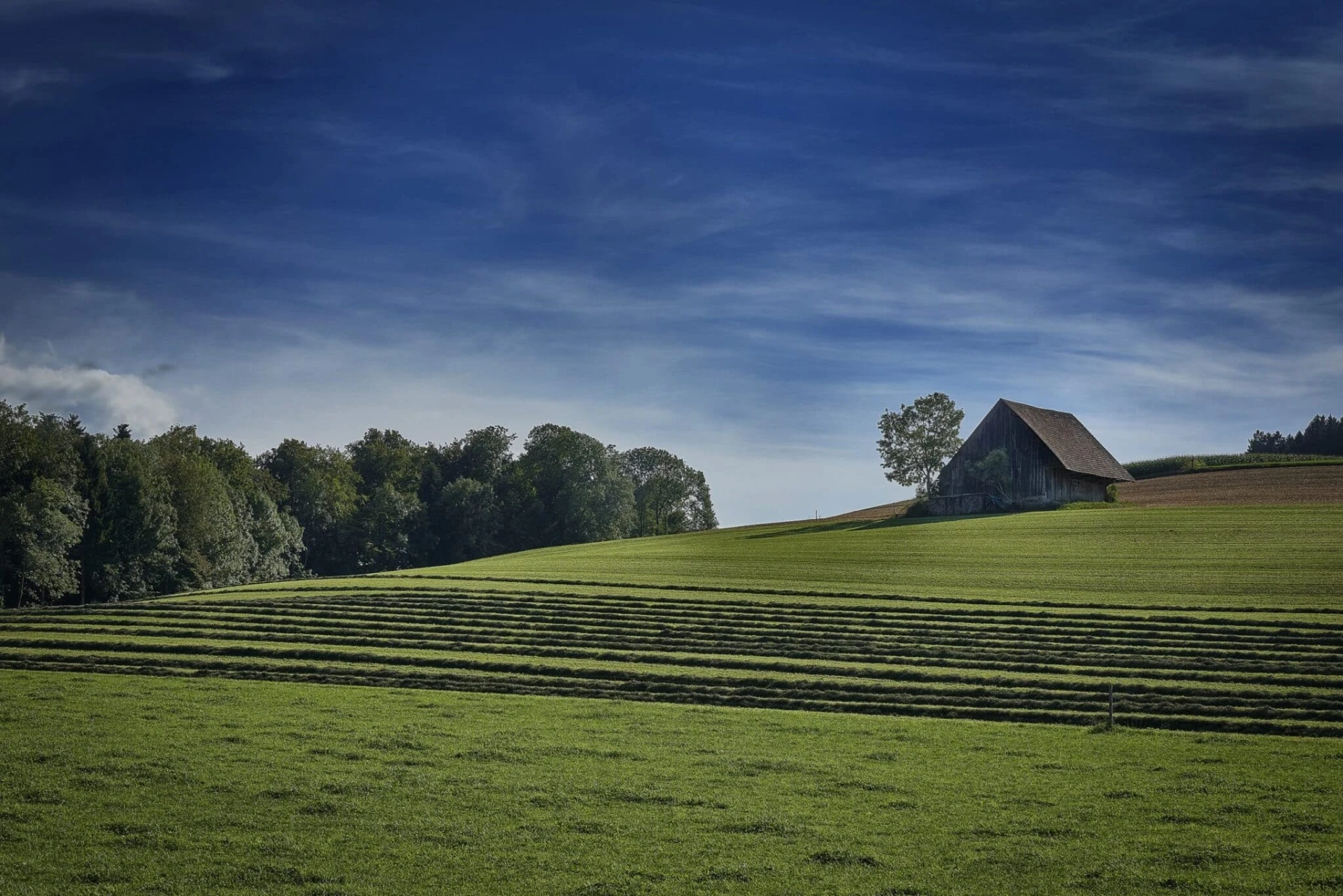
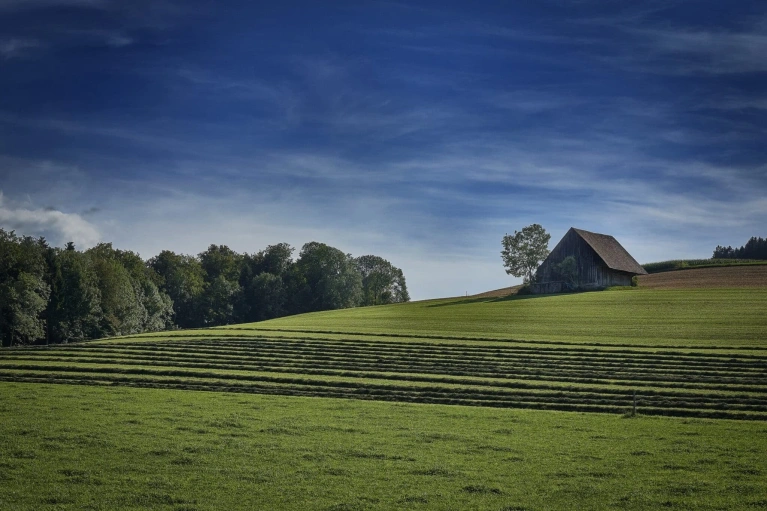
(Photo: Image wirestock on Freepik)
The Rural Land Property Tax (ITR) is charged annually by the Federal Revenue Service and can be a headache for producers who do not know about the subject. Therefore, Agro Estadão spoke to an expert on the subject to provide a guide on the ITR.
What is ITR?
The ITR is a tax, that is, a federal tax that is levied on rural property. In this regard, it is similar to the Urban Property and Territorial Tax (IPTU). In more colloquial terms, it would be a rural IPTU.
“It is one of the few taxes in the Brazilian tax system that is levied on already established wealth, not on new wealth”, explains the partner at Maneira Advogados and master in Tax Law, Guilherme Picinini.
What is the ITR value?
The ITR is calculated taking into account two factors: the ITR rate and the value of the taxable bare land. Just multiply one by the other to find the total ITR. "In practice, the value is calculated using the platform provided by the IRS. But it's good to know the calculation basis", points out Picinini.
- ITR rate – is obtained based on the degree of use of the property. To reach this number, it is necessary to remove the area with improvements and the area allocated to environmental legislation, that is, only the effective area is used. Then it is calculated how much of this area is actually being used, whether for pasture, crops or extractivism. In addition to the degree of use, the final ITR rate also takes into account the size of the property. Basically, the higher the level of use, the lower the tax rate and the larger the area, the higher the tax rate, according to the table. Which can vary between 0.03% and 20%.

- Value of bare taxable land – is calculated based on the value of the property excluding improvements, pastures, crops and planted forests, that is, the value of the land as if nothing had been done to it. From this, the value of land not used by the producer is also removed, such as permanent preservation areas and legal reserves. In the end, we arrive at the value of the bare taxable land.
TIP: Every year, the Federal Revenue Service makes bare land prices available for each municipality, which are considered by it in the system that calculates the ITR.
Who should pay the ITR?
Basically, whoever has the property or possession or useful domain of the rural land on January 1st is the one who must pay the ITR. For example, a person who sold a property in February this year is still responsible for the property's ITR this year.
Another example is in cases of leasing. Whoever leases or rents the property remains responsible for paying the ITR, unless otherwise provided for in the rental or lease agreement.
Who is exempt?
The Constitution provides for exemption in some cases. One of these situations is when the area is classified as a small rural plot. This metric may vary by country. Legally, the dimensions to be a small rural plot are:
- in the western Amazon or Pantanal – properties with up to 100 hectares;
- in the Eastern Amazon and in Polígono da Secas – property with up to 50 hectares;
- other locations – properties up to 30 hectares.
To find out which municipalities are part of each region, the Federal Revenue Service created Normative Instruction 256 of 2002, which provides for the classification of each municipality in Brazil within these parameters.
Rural properties near or within cities: do you pay ITR or IPTU?
The specialist explains that this is a common question and that it can have different understandings. According to the higher courts of justice, what will determine which tax to pay is the use of the property. Furthermore, the National Tax Code provides criteria for IPTU to be charged on the property. Some of these criteria relate to infrastructure, such as sidewalks and water supply. Picini also remembers that IPTU and ITR are self-excluding.
How to pay ITR?
Unlike IPTU, the taxpayer is the one who has to provide the information to calculate the tax. To do this, he needs to file the Rural Land Property Tax Declaration (DITR), a system similar to the Personal Income Tax Declaration (DIRPF).
This declaration is made up of two documents that are generated from the system provided by the Federal Revenue Service:
- Information and Registration Update Document for Rural Land Property Tax (Diac);
- Rural Land Property Tax Information and Calculation Document (Diat)
1st step: download the app
The IRS provides a program every year that can be downloaded directly from the website. This is where the information will be provided and the platform is compatible with different operating systems, just select the type when downloading.
TIP: Each year the IRS launches a different program, so it is necessary to pay attention to the start date of ITR payment (See below).
2nd step: fill in information
After accessing the program, it will be time to fill in the information. Lawyer Guilherme Picinini reminds us that it is not necessary to attach documents, but recommends that the producer has already separated some information to make it easier to fill out.
Among the items that will be completed:
- Address of the rural property;
- Property identification code at the Federal Revenue;
- Property code at INCRA;
- Owner data and property area data – for example: number of hectares for legal reserve, number for permanent protection area;
- Value of bare land – value of the land after improvements, pastures or plantations, forests that were planted, that is, the value of the land as if nothing had been planted or done on it.
To obtain this and other data required by the program, the following documents may help:
- Public deed of rural property;
- Rural Property Registry (CAFIR);
- Personal Income Tax Declaration (IRPF) of the owner;
- Invoices and proof of amounts used in improvements to the property.
TIP: As with the income tax declaration, it is recommended that these documents, especially notes and receipts, be kept for at least five years. This is because the Federal Revenue Service can contest the DITR and demand proof of the data presented.
It is also possible to import DITR information from the previous year through the program, similar to what happens in DIRPF.
3rd step: issuing the invoice
Based on the information provided, the system will generate a bill, a Union Collection Guide (GRU). This bill can be paid at any bank or even online through banking applications.
When filling out the DITR, you can also choose between paying in a single installment or dividing it into up to three successive installments
When should I pay the ITR?
The starting date for ITR calculation and payment is not fixed, but historically it usually starts in mid-August. The deadline for payment of the single quota is the last day of September, and the deadline for making the DITR is the last business day of September.
What is the ITR for?
One of the characteristics of the ITR is that it is a tax without a linked destination, points out the lawyer. This means that it does not have a specific purpose like the Rural Worker Assistance Fund (Funrural), in which the resources raised go to fund rural retirement.
This tax will be used to apply public policies in general, that is, it can be used to build roads, hospitals, schools or any other purpose of the public sector.
In addition, the ITR has a particularity about who will receive the money. As a rule, 50% of the revenue goes to the municipality of the rural property and the other 50% to the Union – a federal entity. However, if the city has an agreement with the Union, all amounts collected will go to municipal coffers. As municipalities have few sources of income, many end up entering into this agreement.
Another function of the ITR that Picinini highlights is the economic one. "The ITR rate progresses inversely proportional to land use, so the more land is used, the lower the ITR rate is. It also has an incentive function for rural landowners to use their land in the best possible way", he points out.
What are the fines and penalties if ITR is late?
Picinini warns that producers must pay close attention to the deadlines for transmitting the declaration and paying the ITR, as the fines are heavy and can increase the debt with the Federal Revenue Service.
For those who forgot to pay the ITR bill, the fine is daily and corresponds to 0.33% of the tax amount with a limit of 20%. In cases of delay in submitting the DITR, in addition to other penalties, the taxpayer also pays a fine of 1% on the amount of tax due per month. In addition, the total tax will also be adjusted for inflation and interest.
Tips on ITR
Lawyer Guilherme Picinini also highlights the importance of preparing in advance and not leaving payment until the last minute. "The taxpayer will have fewer surprises when making the declaration. Even considering that he will have to pay the tax in the month of September itself, which is the fatal deadline for the declaration, it is important that he already has an idea of how much he will also need to pay to the financial organization. And there is a risk of the system presenting instability. Leaving it until the last few days can make the taxpayer's life a little more complicated", he warns.
The tip is to transmit the declaration, the DITR, at least one week before the deadline. Furthermore, the expert points out that every year the IRS provides questions and answers to taxpayers' questions.
See other related news stories


Press
Averages should not ignore the Contumacious Debtor Law, experts say
May 11, 2026Media should not ignore the Contumacious Debtor Law, experts say Risks are greater for companies that fail to comply with balance sheet obligations and are unaware of the situation of related parties By Suzana Liskauskas, Para o Valor — Rio de Janeiro Instituted...