Dados necessários para melhorar nosso serviço e personalizar a sua experiência.
International jurisdiction and social justice: Mariana’s accident and its consequences

International jurisdiction and social justice: the Mariana accident and its consequences
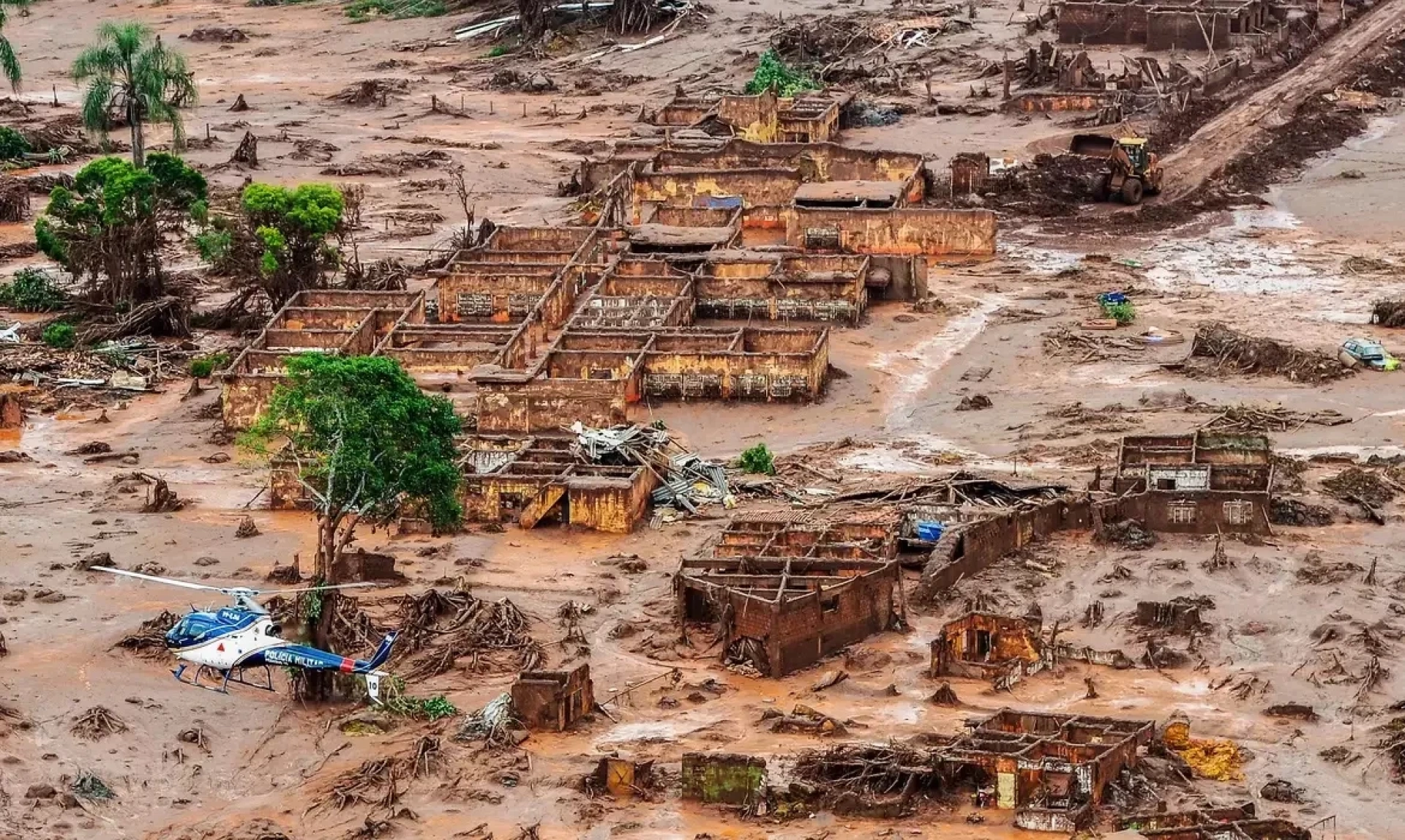
Almost by irony of fate, in the same week as the agreement was signed, the trial of the reparation action filed by the municipalities harmed by the dam collapse against the controlling companies of the Brazilian mining companies involved in the accident also began in the United Kingdom (case HT-2022-000304). In a cumulative — or “complementary” manner, as the municipalities seek to sustain —, the claim that is the object of the British action is precisely compensation, for their own rights and in the name of the community, for material and moral damages and their own, collective and diffuse property rights.
But after all, if the billion-dollar agreement signed was intended precisely to provide “full and definitive” reparation for the damage caused by the collapse of the Fundão Dam, what would be at stake in the English court?
The answer to this question is, at the same time, evident, embarrassing and capable of stirring passionate speeches of all kinds.
Evident, because what is sought is the new penalization, in foreign territory, of companies located in Brazil, with notorious solvency in national territory, related to an event that occurred in Brazil, which has been judged by Brazilian institutions and laws. Embarrassing, because the filing of demands like this filed by the municipalities in the “Mariana Case”, in addition to signifying a waiver, through cross-cutting means, of the immunity from jurisdiction of the Brazilian State and a breakdown of the federative balance, reveals an unjustified distrust of a subnational entity in the justice system of its own country.
Sentimentality about the topic
Finally, the answer to the question asked previously is also capable of touching passionate speeches, because it takes courage to face all the sentimentality that the topic provokes. After all, on the one hand, what we have is the fair defense of national institutions and, on the other, the necessary respect for the painful memory of this regrettable human and environmental disaster.
And it is precisely in light of this entire context that the Federal Supreme Court will have the opportunity to comment on the matter, which will probably occur in the context of Claim of Non-compliance with Fundamental Precept No. 1,178. Let us say “probably”, because there are procedural issues that will still be subject to judgment and which, if not overcome, could prejudice the analysis of the merits of the claim.
In any case, it cannot be ignored that the direction of the ADPF could damage the prestige of the most relevant Brazilian justice institutions, as well as negatively influence the business environment in Brazil.
Firstly, we cannot agree with the idea that the filing of legal actions by Brazilian municipalities abroad would appear as a mere administrative act of management. In truth, this is an ill-fated attempt to exercise sovereignty by a subnational entity that, unconstitutionally, accepts receiving and carrying out orders from a power constituted by a foreign State.
Furthermore, by seeking to protect public and social assets, the environment and diffuse and collective interests abroad, municipalities end up preventing the control and effective participation of the respective public ministries to which they are subject in what may be one of the most relevant cases (if not “the most”) of these same entities. In fact, one cannot fail to highlight the commendable performance of parquet in dealing with the problems arising from the Mariana disaster, which was able, in a coordinated manner with those involved (responsible companies and victims), to effectively fulfill the binomial “reparation and accountability”.
Environmental protection policies
Still analyzing the great role played by the Brazilian authorities in the case of the Fundão Dam, it is noteworthy that when debating the already mentioned agreement of almost R$170 billion, little (or almost nothing) is discussed about the various policies created by these same institutions to protect the environment and the community from potential new damages resulting from mining activities in Brazil. There are several examples that can be given in this sense, and it is worth listing the following (some national and others specific to Minas Gerais):
1) institution of the State Policy on Dam Safety in Minas Gerais, which defines rules to be observed by entrepreneurs who own industrial waste dams, mining dams, water dams or liquids associated with industrial or mining processes;
2) institution of environmental security with the purpose of guaranteeing socio-environmental recovery in cases of accidents and for deactivation of the dam;
3) definition of new, stricter criteria for preparing the Emergency Action Plan for Mining Dams, an integral part of the Dam Safety Plan, which aims to minimize damage and loss of life, in addition to mitigating environmental impacts and protecting cultural heritage;
4) institution of the Paebm Conformity and Operationality Assessment (ACO) for dams with high Associated Potential Damage;
5) change in regulations and sanctions amounts by the National Mining Agency;
6) obligation to de-characterize upstream dams;
7) imposition of restrictions on the construction and/or maintenance of dams that have communities in self-rescue zones; among countless other measures.
But that's not all.
As previously mentioned, it is worrying (to say the least) what this true “forum shopping” can generate for the business environment in Brazil. As highlighted by the Brazilian Association of Open Capital Companies (Abrasca), in its statement filed in ADPF nº 1,178:
“As the action proposed before a foreign court does not induce lis pendens and does not prevent the Brazilian judicial authority from hearing the same case and those related to it, in a context of globalized economic relations — in which many of the companies that appear on the defendant side of claims filed abroad by municipalities and belong to the same economic group as Brazilian companies —, the same facts may result in multiple and quite costly compensations, including in reprehensible bis in ditto.”
Now, it is not necessary to say much to see that the eventual authorization for subnational entities to litigate abroad is a lethal ingredient for foreign productive investment in Brazil.
We cannot be complicit and insensitive towards one of the saddest chapters in our history, which was the tragedy of Mariana. However, as Minister Sepúlveda Pertence said, in a lapidary phrase, that “unconstitutionalities cannot be compensated”, we must have the responsibility to affirm that past errors should not be corrected with new errors in the present or in the future.
In a contribution to building a future of success, the Brazil Europe Integration Forum (Fibe) will bring together international experts in the search for safe, balanced and efficient solutions for mass litigation in the Economic and Social Impacts of Mass Litigation Forum. The event will be held over two days, November 28th and 29th, at the CCB — Centro Cultural de Belém, in Lisbon. Pre-registration is open via the Fibe website (click here).
Eduardo Maneira
He is a full professor of Tax Law at the National Faculty of Law of UFRJ, a PhD in Law from UFMG, coordinator of tax law at ESA (Escola Superior da Advocacia) Nacional and founding partner of Maneira Advogados.
Pedro Henrique Garzon Ribas
he has a master's degree in Tax Law from USP, member of the FIEMG Tax Council, director of the Minas Gerais Institute of Tax Law and partner at Maneira Advogados.
See other related news stories


Press
Averages should not ignore the Contumacious Debtor Law, experts say
May 11, 2026Media should not ignore the Contumacious Debtor Law, experts say Risks are greater for companies that fail to comply with balance sheet obligations and are unaware of the situation of related parties By Suzana Liskauskas, Para o Valor — Rio de Janeiro Instituted...