Dados necessários para melhorar nosso serviço e personalizar a sua experiência.
Selective Tax on the extraction of mineral goods

Selective Tax on the extraction of mineral assets
Incidence forecast is endless unhappiness
The incidence of the Selective Tax on the extraction of mineral goods has been a point of great controversy in the debates on tax reform. The dissent is so great that there is no agreement as to whether the constitutional text would have authorized its collection in the event of sales abroad.
This is because item I, §6 of article 153, by prohibiting charging “on exports”, would limit the content of item VII of the same article, which states that in the event of extraction, the tax may be charged “regardless of its destination”. This interpretation would be more coherent with the constitutional text as a whole, which enshrines the principle of destination for all taxes, except, obviously, for the Export Tax.
The maxim that “taxes should not be exported” permeates the constitution when it provides for CIDEs (art. 149, §2º, I), Social contributions (art. 149, §2º, I), IPI (art. 153, §3º, IV), ICMS (art. 155 §2º, X), ISS (art. 153, §3º, II) and, now, with the advent of Constitutional Amendment 132/23, also for CBS, IBS (art. 156-A, §1º, III) and Selective Tax (art. 153, §6º, I).
Such a reading would not make the expression “regardless of destination” a dead letter either. This is because the tax, conceived as the Sin Tax, distances itself from its original purpose by providing for the hypothesis of impact on extraction, whatever the use of the mineral asset. Oil, for example, is an input for medicines, cleaning products, etc. The expression would ensure its incidence in any situation, bringing the Selective Tax closer to a carbon tax.
This does not appear to have been Congress' reading, as it appears in the Report by Senator Eduardo Braga (MDB-AM), which inserted item VII into §6 of art. 153 to the text of the Constitutional Amendment, the justification that “to restrict polluting and environmentally degrading activities is that we propose the extension of the incidence of the tax to extraction activities, in which case the destination of the extracted product (domestic or foreign market) will not matter”.
At this point, the maxim applies that legal interpretation should not be guided by the subjective intention of the legislator, but by the objective meaning of the text. As stated, it seems to us that the best meaning of the rule is that the impact on exports is unconstitutional.
Moving on, the reasons given for implementing the Selective Tax in this situation are not convincing either. See the continuation of Senator Eduardo Braga's Report:
“After all, the damage to the national territory is permanent (socialization of losses), but the economic result is concentrated in the few companies that explore the activity (individualization of profits). To operationalize taxation on extraction, we added to the text the possibility of establishing ad rem (specific) rates, in order to affect the quantity of the product extracted, regardless of sales revenue. However, to achieve balance and reasonableness, we established, in this In this case, the charging ceiling will be 1% of the market value of the extracted product.”
The justification that the extraction of mineral goods is “permanent” but the profit is individualized sounds like a gross simplification. Oil, iron ore and other extraction projects exploit non-renewable natural resources and, precisely for this reason, are subject to the payment of royalties to the State, financial compensation for the use of mineral resources in their territories. The rates are variable and take into account a series of factors, such as field productivity, the reference price on the international market, among others, and can reach 40% if special participation is added.
In other words, the constituent itself created a figure to establish this financial compensation to the State. The calculation method, regulated by ordinary law, is sophisticated, taking into account a series of complexities, and ensures adequate compensation.
To illustrate the above, royalties were responsible, last year, for revenue of approximately R$54 billion. Adding the aforementioned amount to the special participation amount — just over R$38 billion — we arrive at the imposing figure of R$92 billion. Furthermore, in the face of a serious fiscal crisis in the country, the export of commodities has been a fundamental element for a positive trade balance and, consequently, maintenance of the value of the national currency.
Thus, a generic forecast of the incidence of the Selective Tax, at a rate of 1%, without any methodology in the calculation, is not justified under the reasons set out in the Senate report.
Attention is also drawn to the contradiction of the National Congress, which recently adopted several measures in the opposite direction, to exempt petroleum derivatives due to the inflationary effect. We remember the edition of Complementary Law 194/2022, which recognized the essentiality of fuels and natural gas, limiting the incidence of ICMS on such products, and the Constitutional Amendment 123/2023, which recognized the state of emergency resulting from “the extraordinary and unpredictable rise in the prices of oil, fuels and their derivatives and the resulting social impacts”. Encumbering the extraction of mineral assets, without adequate care, seems to be a reckless measure and out of step with recent learning.
The 1% ceiling apparently mitigates this effect. However, it is worth remembering that the Selective Tax is the basis for calculating other taxes and has a cumulative effect on the price of the final product.
Finally, the impact on extraction is contrary to plans to strengthen the national industry itself. Consider the incongruity: the incidence of the Selective Tax on imports is restricted, in PLP 68/24, to mineral goods in their raw state. That is, iron ore, oil and natural gas. Therefore, all derivatives of these goods will not be affected when imported, while nationals who use them as raw materials will have to bear the cost of the Selective Tax. This is an unprecedented measure: the Brazilian government subsidizing Chinese steel!
The forecast of the incidence of the Selective Tax on extraction is endlessly unfortunate. Not even the technical team at the Ministry of Finance was in favor of its inclusion. The Selective Tax was created to discourage the consumption of goods that are harmful to health or the environment. The extraction of mineral goods is on the opposite side of the economic chain, far from the final consumer. What is the intention? Tax the iron ore that will be used to build solar panels? Tax oil used as raw material for medicine? Harm the national industry?
Perhaps this is worth a reflection for the National Congress: the Constitution authorizes federated entities to exercise their tax powers, but does not require its exercise. The Wealth Tax, for example, was never implemented. If, quoting Chief Justice John Marshall, The power to tax involves the power to destroy, it is worth saying that perhaps true strength lies in knowing when not to use that power.
EDUARDO MANEIRA – Professor of Tax Law at the National Faculty of Law and lawyer
LUIS EDUARDO MANEIRA – Lawyer
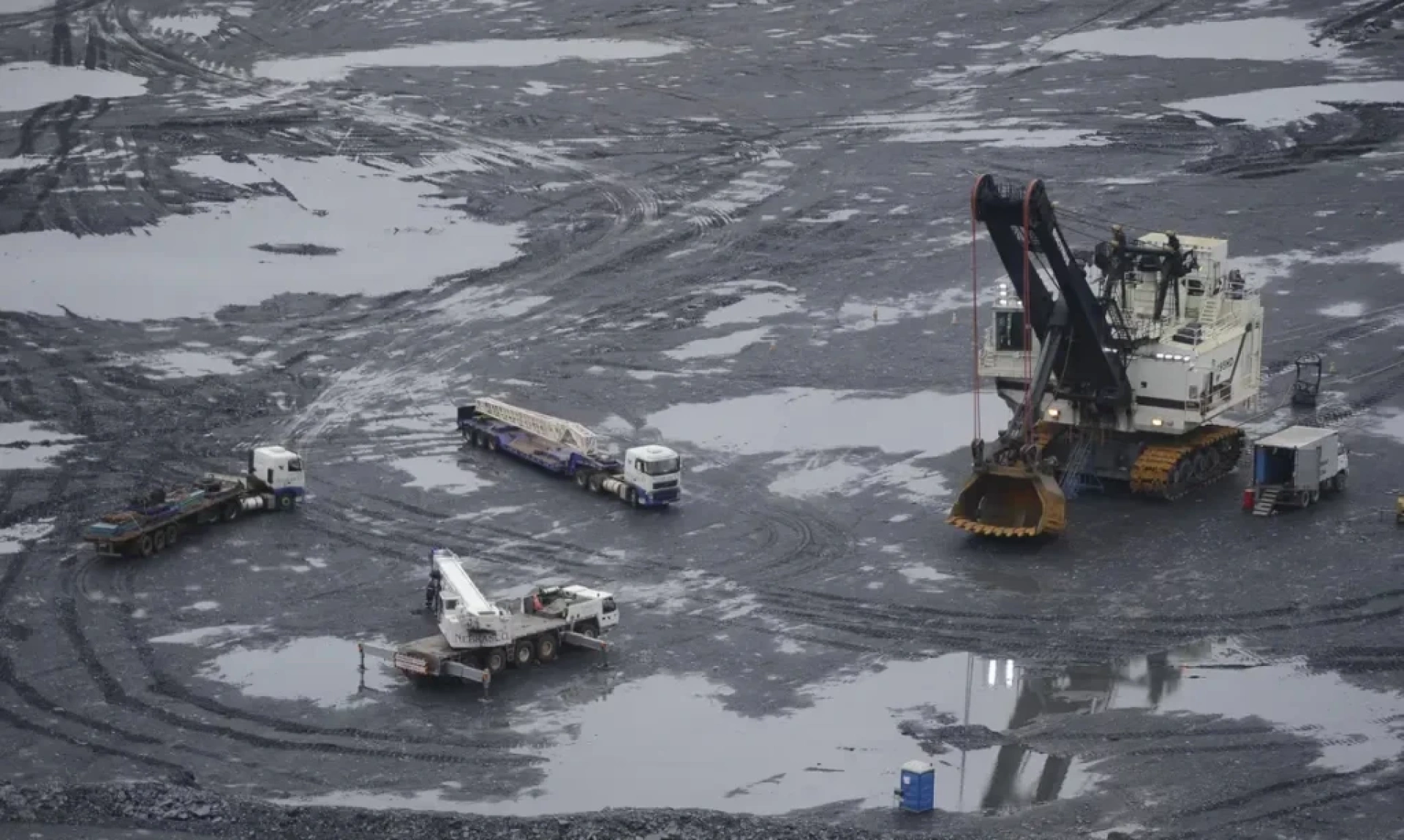
(Image: José Cruz/Agência Brasil)
https://www.jota.info/opiniao-e-analise/artigos/imposto-seletivo-na-extracao-de-bem-mineral-02072024
See other related news stories

Articles
Silent reimbursement and the risk of non-cumulative
January 7, 20264th, §7th, prohibits the discounting of credits for products that would be covered by the exemption or zero rate, but were partially reencumbered by art. 4th, §4th, item I, of LC 224/2025. In this way, the rule would have promoted...


Articles
The tax battle of funds: the case of Fiagro
September 30, 2025The tax battle for funds: the Fiagro case The future of taxation will define whether Brazil will continue to stimulate productive financing or give in to the tax revenue temptation Arnaldo Jardim, Eduardo Lourenço Real Estate Investment Funds (FIIs) and Investment Funds in...

Articles
Analysis: Rural producer in tax reform: less taxes, more competitiveness
September 23, 2025Analysis: Rural producer in tax reform: less taxes, more competitiveness There is little left for the tax reform to enter the testing phase. Because it is new, many prefer to defend chaos – especially because it is easier to oppose than...

Articles
The principle of tax neutrality and the issue of default
May 13, 2025Summary: This article problematizes the effectiveness of the principle of tax neutrality in the new Brazilian consumption taxation model established by Constitutional Amendment No. 132/2023, with special attention to the absence of a legal provision on the return of IBS/CBS in...