Dados necessários para melhorar nosso serviço e personalizar a sua experiência.


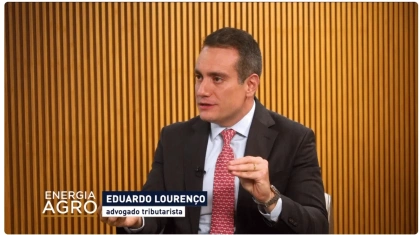
Eduardo Maneira speaks to FOLHA DE S.PAULO about the government's proposal to tax dividends
Report from Folha de S.Paulo heard from Dr. Eduardo Maneira, president of the Special Commission on Tax Law of the OAB, regarding the government's proposal to tax dividends.

Dividend taxation comes under pressure from lawyers, doctors, industry and financial market
Entities plan to make one of the points with the greatest impact in tax reform more flexible
20.Jul.2021
BRASILIA
The taxation of dividends, one of the points of greatest impact in the bill that changes the Tax Renda, is under attack from different sector entities.
Categories such as lawyers and doctors, as well as representatives of the industry and even the financial market, want to make the proposal more flexible to have partial or full exemptions in the use of the instrument.
According to Federal Revenue calculations, the 20% taxation of dividends (added to the end of the deductibility of interest on equity) is the item that generates the most revenue in the government's proposal (more than R$32 billion annually to the public coffers from 2023 onwards).
A dehydration at this point would further unbalance the proposal, whose net impact on public accounts is negative by almost R$ 30 billion per year.
The OAB (Brazilian Bar Association) plans to intensify its coordination in Congress to create protection for independent professionals, so that the dividends received by them remain free.
According to the proposal from the government and the rapporteur, deputy Celso Sabino (PSDB-PA), the instrument would be charged both in these cases and for investors in the financial market (when investing in the Stock Exchange, for example).
DIVIDENDS TAXATION
- How it isThe distribution of dividends to shareholders is exempt
- How it would beTaxed at 20% at source. There will be an exemption for up to R$ 20 thousand per month, but as long as the individual receives it from a micro or small company
- Rapporteur's versionDeputy Celso Sabino (PSDB-PA) maintained the terms proposed by the government, but removed the collection of dividends when the distribution occurs between companies in the same group
Eduardo Maneira, president of the OAB Special Taxation Commission, states that the idea is to introduce the exemption to all professions regulated by law that operate through legal entities — which covers independent professionals such as doctors and lawyers, as well as engineers, veterinarians, and other cases. “There has to be differentiated taxation”, he says.
The OAB states that taxation on professionals would end up encouraging the use of accounting tricks such as recording personal expenses (such as travel or dinners) in the company's accounts, to reduce the calculation of dividend taxation.
For Way, if the objective is to tax these professionals more, the best way would be to increase the rates charged directly from firms (not from individual shareholders).
Another request from the OAB is that the exemption of R$20,000 per month be extended to companies of all sizes (in the current proposal, the benefit only applies when the dividend is paid by micro and small companies).
Second Way, professionals can have the same monthly profit in different sizes of companies, and that is why he criticizes the difference in taxation to be generated by the proposal. “Either the rule applies to everyone or it is unfair,” he said.
He denies that flexibility would encourage pejotization because, in his view, professions such as lawyers often need to work in society. “Pejotization is fraud in labor legislation”, he states.
The rapporteur of the proposal stated last week that he intends to extend the exemption to all companies, but, in return, would reduce the exemption range from R$20,000 to R$2,500 per month.
Cremesp (Regional Council of Medicine of the State of São Paulo), linked to the CFM (Federal Council of Medicine), sent a public letter to the Ministry of Economy and presidents Rodrigo Pacheco (DEM-MG), of the Senate, and Arthur Lira (PP-AL), of the Chamber, against the taxation of dividends.
“Cremesp does not consider at all reasonable, from any economic angle, a project that revokes the exemption from dividends and directly affects medical legal entities, which make their withdrawals, precisely, on top of the profits from their businesses”, states the entity.
There are also calls for changes among investors. In addition to the traditional complaint about the taxation of dividends representing a double charge (because it would tax resources distributed from the company's profit, already taxed), more specific changes are requested.
The ministry has received, for example, demands to exempt the collection of dividends on investment fund portfolios.
Guedes has defended charging dividends as a way of reaching the richest, although he himself has made his proposal more flexible in partnership with Sabino.
“[Taxation of dividends is a] very welcome source from the point of view of social justice. Taxing the super-rich and financing the tax reduction for wage earners and the strengthening of Bolsa Família”, he stated.
In the substitute prepared by Guedes in partnership with the rapporteur, the transfer of dividends between companies in the same group and resources distributed to family businesses, used by richer people for tax and succession planning, are now exempt.
Although he partially calmed the spirits of businesspeople with a more intense cut in corporate income tax (from 15% to 2.5% in the base rate), the rapporteur continues to receive sectoral demands with pressure for new changes.
Industry representatives, for example, met with Sabino at the end of last week and are now preparing a technical opinion on the text, with suggestions for adjustments.
They want exemption from dividends also for related companies — when there is a percentage of participation without control.
New changes are also being negotiated to ensure that more companies adhere to the presumed profit (simplified method of calculating tax).
The food sector, with bars, restaurants and supermarkets, had a meeting with Sabino this Monday (19) and asked for an adjustment in the point of the project that eliminates the possibility of companies deducting food vouchers from the Income Tax calculation base.
“This generates a certain fear in the sector. The line presented by the sector is one of adjustment to find a calibration that is not harmful to a program that today guarantees food for workers and, at the same time, is a source of investment for the sector”, said the coordinator of the Parliamentary Front for Commerce, Services and Entrepreneurship, deputy Efraim Filho (DEM-PB).
The congressman also states that the cut in subsidies proposed by the rapporteur to compensate for the loss of revenue from the proposal may face difficulties in Congress.
The opinion reduces tax incentives for the chemical, pharmaceutical, cosmetics and ship and aircraft industries, as well as thermoelectric plants.
“The cost in Brazil is very high. We have to look for ways to compensate for the tax cut, but this compensation cannot make some sectors unviable,” he said.
Deputy Bohn Gass (PT-RS), leader of the party in the Chamber, states that charging dividends is the main point of agreement with the proposal under discussion. Even so, he said he will be open to dialogue with all potentially affected people and says that the reform does not tax the truly richest.
“The whole world is showing that they have to charge the super-rich and their wealth. This is far from being charged in this reform. We think there has to be more progressiveness”, he said.
See other related news stories




Press
Averages should not ignore the Contumacious Debtor Law, experts say
May 11, 2026Media should not ignore the Contumacious Debtor Law, experts say Risks are greater for companies that fail to comply with balance sheet obligations and are unaware of the situation of related parties By Suzana Liskauskas, Para o Valor — Rio de Janeiro Instituted...