Dados necessários para melhorar nosso serviço e personalizar a sua experiência.


Agriculture in Tax Reform: what, in fact, did the FPA achieve?
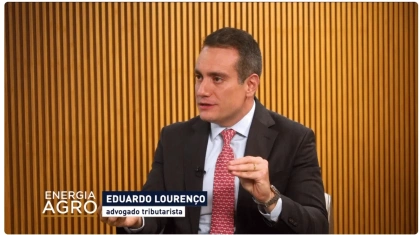
In an article published in Gazeta do Povo, deputy Pedro Lupion, president of the Parliamentary Front for Agriculture, and lawyer Eduardo Lourenço, partner at Maneira Advogados, evaluate the text of the tax reform and the participation of the FPA in defense of the sector in discussions surrounding the subject.

Agriculture in Tax Reform: what, in fact, did the FPA achieve?
By Pedro Lupion
Photo: Disclosure/Agricultural Parliamentary Front
The promulgation of Constitutional Amendment 132/2023 brought many points to be resolved and, in a way, doubts, but it only surprised those who had not been following the development of the proposal since 2019.
Not that there is certainty about everything that will happen. We know that the Complementary Law and the regulations will regulate most of the points and, therefore, only with these rules will we have certainty about the complete profile of the new tax system. The fact is, however, that the changes promoted by the PEC represent, for the most part, important advances compared to the current system.
When we return to 2019, we remember that, at that time, PEC 45 was – and we made this warning on several occasions – extremely prominent in the Brazilian reality. At the time, we said that PEC 45 would work in Brazil in the same way that a physics formula can achieve a result in an entrance exam (when friction, pressure changes, temperature variations, etc. are disregarded). In other words, it was a laboratory proposal that disregarded the geographic, social and economic particularities of Brazil.
In that text, the agricultural sector identified, in particular, the following problems: (i) prohibition of any type of differentiated treatment, with a single rate for all goods and services; (ii) uncertainty about non-cumulative credit and, in particular, export credit; (iii) scope of the concept of taxpayer; (iv) food burden, especially with the end of the tax exemption on the basic food basket; (v) investment burden and uncertainty regarding the use of credits; (vi) lack of correct treatment of accumulated PIS, Cofins and ICMS credits; (vii) incorrect treatment of the cooperative act; (viii) scope of the selective tax; and (ix) burden on agricultural inputs.
At the time, under the presidency of federal deputy Alceu Moreira, the Agricultural Parliamentary Front presented the points about which the sector was, quite rightly, concerned. That was when debates began in different environments – academic, business and, most importantly, in the National Congress.
Now under the presidency of federal deputy Sérgio Souza, author of several amendments signed by almost two hundred parliamentarians, discussions have evolved and the sector has established itself as a player in this debate. These amendments were essential to show not only the need to adjust the text, but also that, to maintain the premises of the Tax Reform in the sense of simplification and maintenance of the tax burden, the Constitutional text should adapt to the reality of Brazilian agriculture (and not the other way around).
Finally, under the current presidency of the FPA (of federal deputy Pedro Lupion, one of the authors of this article), the sector reached, at a constitutional level, its prominent position, recognizing its particularities and was certified as the main vector of the economy. We were able to closely monitor the participation of all FPA congressmen in the consolidation of advances, especially, in addition to those already mentioned, deputy Arnaldo Jardim and senator Tereza Cristina. There were almost a hundred amendments and suggestions for changes, the most important of which were met, as will be demonstrated below.
It is worth noting – in a very simple and necessary introduction – that the Constitutional Amendment of Tax Reform (EC 132/2023) replaces five taxes (ICMS, ISS, PIS, Cofins and IPI) with a Selective Tax (IS, under the jurisdiction of the Union) and two taxes in the style of VAT (Value Added Tax): Tax on Goods and Services (IBS, under the jurisdiction of States, DF and municipalities) and the Contribution on Goods and Services (CBS, under the jurisdiction of the Union). The general rule is that taxes (IBS and CBS) are levied at the destination, with a single rate for all goods and services consumed or provided in the location - except for exceptions provided for in the constitutional text -, a broad debit and credit regime (not full cumulativeness) in the Added Value (VAT) system, with immunity on exports.
Compared to the text initially proposed in 2019, we had many advances that the Agricultural Parliamentary Front was able to contribute, in an indispensable way, to the Constitutional Amendment. We will comment on some below.
1) Scope of the concept of taxpayer: one of the main points of collision between the agricultural sector and the initial reform proposal has always been the attempt to establish that each and every rural producer would be a taxpayer. The Brazilian reality shows that small (and even medium) rural producers do not have the operational and financial capacity to, without harming their own subsistence, control debt and credit in the proposed way. You can see that we are in the discussion phase of technology in the field, but we have places in Brazil where we don't even have electricity – perhaps internet access. This, without a shadow of a doubt, would result in an increase in expenses for the producer, since, from the moment that the credits are not calculated when purchasing inputs, their disbursement to pay off the tax upon sale would be greater. Here there would be, without a shadow of a doubt, an increase in the tax burden, since the input would be taxed and the credit would not be usable.
The solution to this problem was to establish a ceiling for who will be contributors or not. Along these lines, the EC predicts that, in addition to the integrated producer, those who earn up to 3.6 million reais per year will not be contributors, also generating presumed credit for the purchasing industry as a way of equalizing the non-cumulative nature. This producer can also choose to be a contributor if they wish. This measure reaches approximately 95% of Brazilian rural producers. And, linked to this evolution, we still have the issue of presumed credit, which is the instrument through which neutrality can achieve the operation and which will be established by Complementary Law.
2) Zero rate for Basic Basket: the initial proposal of PEC 45 did not provide for any differentiation in taxation for food. It only brought the possibility of cashback – something that has always been obscure – without showing its effectiveness and which would tend to perpetuate welfare programs. The lack of differentiated treatment for food would, in fact, harm much more than just the rural producer, as the Brazilian population would be affected by having to purchase food at extremely high prices. It was therefore essential to bring about an improvement in the taxation of basic food basket items: today each State has its own basic food basket list and the Union has its own. It turns out that, even though the output is zero, we know that the current way of calculating taxes ends up generating an accumulation of tax residue. That is, in the production process of a food item in the basic food basket (whether on the farm, in industry or even in commerce) there is the incidence of taxes that are not recoverable or compensable, generating a residual effect of tax cumulativeness and bringing this cost to the final price.
With the evolution of the constitutional text providing for the zero rate of CBS and IBS for items in the basic food basket – which the Complementary Law will define – in an effective system of non-cumulative activity, with the possibility of full use of credits resulting from investment and refund/compensation, it is certain that the tax burden on food must be reduced and, as a result, the price for the consumer must be reduced.
3) Reduced tax rate for food: following all the logic of what was said above and with the realization that not all foods will be listed as items that make up the basic food basket, but, at the same time, they must also have different taxation, the PEC provided, like FPA proposals, a different tax rate for food. It is already established in the Federal Constitution that food rates will be reduced by 60%. In other words, if the sum of the food tax rates is 25%, we will have a list of foods that are not covered by the basic food basket (which has a 100% reduction) with a tax rate of 10%. We can mention that studies carried out by specialized entities showed that the taxes to be replaced corresponded to a burden of just over 10% on food. Therefore, a reduced rate that varies between 10% and 12% (40% of the standard) corresponds to the maintenance of the tax burden, if food in general is considered. It is, without a shadow of a doubt, an evolution of the current system, allowing food to arrive cheaper, with fair prices for the consumer.
4) Reduced rate for agricultural inputs: following the same logic of reducing the rate by 60%, the FPA also achieved this differentiation for agricultural inputs, as well as removing the attempted restriction on the concept of inputs. Now, the Complementary Law will define which inputs will be covered by the reduction. It is important to note that, like the previous and next points, even though the vast majority of agricultural inputs have a zero rate of PIS/Cofins and ICMS, the fact is that there is a large accumulation in the chain, due to the need to cancel book-entry credits relating to inputs used in the production of exempt goods (a problem introduced by Agreement 26/21 which, by amending Agreement 100/97, ruled out the possibility of maintaining the credits ICMS when exempt from the sale of inputs). The reform will bring greater rationality to this situation.
5) Reduced rate for agricultural products: in addition to the basic food basket (with zero taxation), food and inputs (rates reduced by 60%), it is stated that the Complementary Law will define agricultural, aquaculture, fishing, forestry and plant extractive products in natura that will also receive the rate reduced by 60%.
6) Selective Tax not levied on agricultural production: this cumulative tax will be levied on the “production, extraction, commercialization or import of goods and services harmful to health or the environment, under the terms of complementary law”. In addition to having the express provision of being regulated by Complementary Law – which avoids the issuance of a Provisional Measure and takes the debate even deeper to the National Congress – it is duly stated that it will not affect those items that will have a reduced CBS and IBS rate, mentioned in the previous items.
7) Adequate treatment of cooperatives: for decades, cooperatives have shown their importance not only for the agricultural sector, but equally for all other sectors that make up cooperativism. Now, the Tax Reform has brought, in its constitutional text, the possibility of establishing a specific taxation regime, in order to maintain its competitiveness.
8) Favored treatment of biofuels: also with the idea of maintaining competitiveness, the FPA fought to update the constitutional text in what was dealt with in Constitutional Amendment 123/22, which provides for the obligation of favored tax treatment for biofuels when compared to fossil fuels. It was also the FPA that fought for the simple, but very relevant, change in the specific fuel taxation regime in order to allow the maintenance and use of credits for inputs used in production.
In addition to all of this, many other points were specifically adapted to the agricultural sector during the discussions. We can list: (i) the conditio sine qua non of export immunity, with guarantee of credits to be refunded within a reasonable period, to be defined by complementary law; (ii) the impossibility of levying IPVA on aircraft and agricultural machinery; (iii) provision, already in the text of the Constitutional Amendment, of a zero rate for vegetables, fruits and eggs; (iv) juices without added sugar in the food concept.
For more than the points mentioned, agriculture will also benefit from some changes proposed by the reform, namely: (i) unification of declarations and other tax obligations; (ii) unification of tax legislation; (iii) unification of the tax administrative process; (vi) reduction of doubts regarding which tax or State or municipality to pay (“conflict of jurisdiction”); (v) possibility of taking credits on all goods and services acquired with the incidence of IBS/CBS (“not fully cumulative”); (vi) possibility of using ICMS, PIS and Cofins credits accumulated up to the moment of transition.
Of course, there is no way to answer, yet and abstractly, whether there will be an increase or reduction in the tax burden. This is because in the current system there are many special regimes – which makes it difficult to define the current burden – and the rate of new taxes has not yet been defined. However, it is important to mention that in the PEC there are mechanisms by which the reference rate will be reduced if there is an increase in the tax burden compared to GDP (art. 130, §§ 4th to 6th of the ADCT), providing greater guarantee that there will be control so that there is no increase in the tax burden analyzed as a whole.
It is still worth clarifying that it is true that the reference rate is expected to be set between 25% and 30%, which places Brazil among the highest VAT rates in the world. However, the taxes to be replaced already have standard rates similar to these (9.25% for PIS and Cofins and 18% for ICMS – totaling 27.25% and calculated from within) and taxpayers are not guaranteed full credit on their acquisitions. In other words: Brazil already has one of the largest VATs in the world and the PEC, by unifying them, will bring greater rationality, adequate treatment and legal security.
It is clear that the proposal is far from the tax system that we would all like. However, it is important that it be compared with our current system, in order to analyze its effects. In this sense, the current text of PEC 45 has the important function of, on the one hand, unifying the regulation of various taxes – which undeniably promotes simplification – and, on the other, ensuring a special and competitive condition for the agricultural sector, which contributes so much to the Brazilian economy. We are proud to have contributed to improving the initial text of the proposal, in order to guarantee adequate treatment of the sector.
For the years 2024 and 2025, the sector must work to achieve adequate taxation “from field to table”, in order to consolidate the specific tax regime for its production. As we have seen, many points will be defined in the Complementary Law, such as the lists of the basic food basket, food and agricultural products and inputs, as well as greater definitions on the selective tax, the presumed credit in transactions with non-taxpayers, the guarantee of refund of export credits, among many other situations that must be foreseen with greater specificity. In other words, now the real battle begins, in which the sector will, through its bench in the National Congress, demonstrate its ability to articulate so that we have a text suited to the Brazilian reality and, in particular, agribusiness.
We know that change and transition will not be easy moments, but they will be necessary to improve and modulate the system now present only on paper. During this period, the importance of the National Congress grows, which must remain attentive to taxpayers' difficulties and act as a sounding board for demands, in order to ensure that the change occurs safely and without increasing the tax burden, guaranteeing, in the end, the desired simplification.
Pedro Lupion
Federal deputy and president of the Agricultural Parliamentary Front (FPA). Rural producer linked to cooperativism, has a degree in Social Communication with an emphasis on Advertising; He has a master's degree in Political Science from the Francisco de Vittoria and Rey Juan Carlos universities, in Spain, and a specialist in Political Communication and Electoral Campaigns from Georgetown University and in Public Administration and Governance from George Washington University, United States.
Co-author of the text: Eduardo Lourenço. PhD student and Master in Constitutional Law from UniCEUB and Master of Laws (LLM) in Tax Law from IBMEC. Partner at Maneira Advogados.
Content edited by: Jônatas Dias Lima
See other related news stories




Press
Averages should not ignore the Contumacious Debtor Law, experts say
May 11, 2026Media should not ignore the Contumacious Debtor Law, experts say Risks are greater for companies that fail to comply with balance sheet obligations and are unaware of the situation of related parties By Suzana Liskauskas, Para o Valor — Rio de Janeiro Instituted...